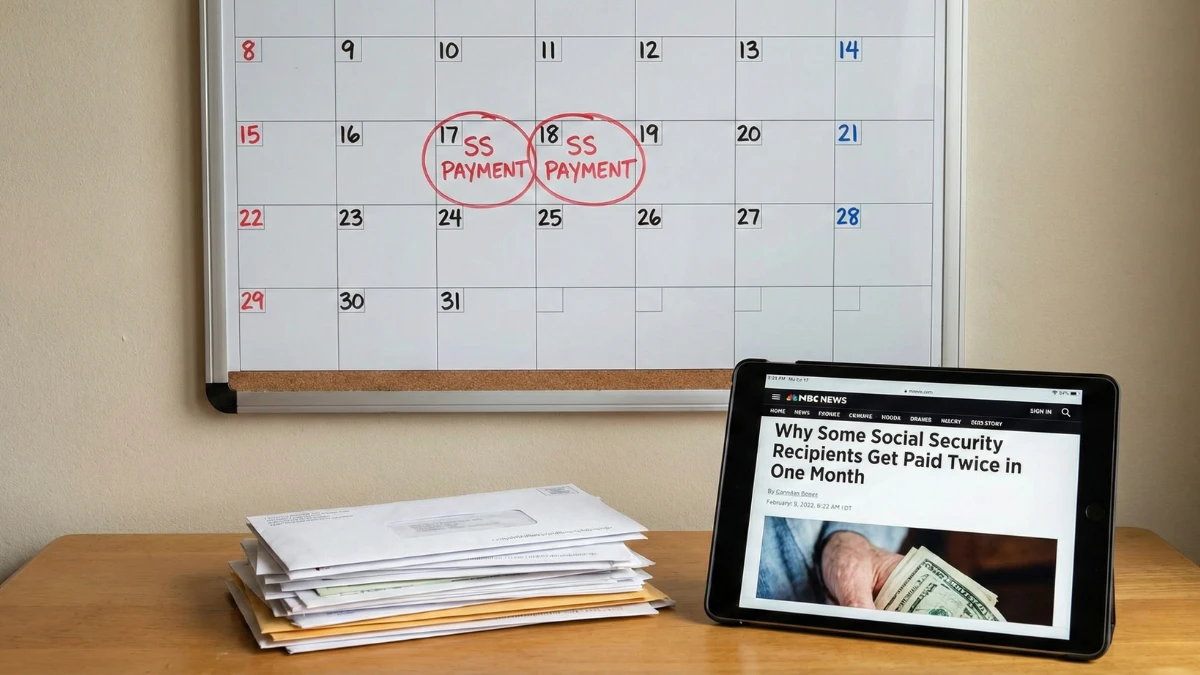
Some Social Security recipients notice two payments arriving in the same month, which can cause confusion and rumors about bonus checks or extra benefits. In reality, getting paid twice in one month is usually the result of standard scheduling rules, not a payment increase or special program. This article explains the official reasons this happens, how payment calendars work, and what the Social Security Administration (SSA) confirms about these situations.
Is Getting Paid Twice in One Month an Error
No. Receiving two Social Security payments in one month is not an error. It happens because of how the SSA schedules payments when certain dates fall on weekends or federal holidays.
How Social Security Payment Scheduling Works
Social Security uses fixed monthly schedules based on benefit type and birth date. When a scheduled payment date cannot be used, the SSA issues the payment earlier, which can place two payments in the same calendar month.
The Most Common Reason: SSI Payment Timing
Recipients who receive Supplemental Security Income (SSI) are the most likely to see two payments in one month.
| Situation | What Happens |
|---|---|
| SSI paid on the 1st | Normal monthly payment |
| 1st falls on weekend/holiday | Payment sent earlier |
| Early payment overlaps month | Two payments appear |
| Following month | No SSI payment |
Why This Is Not an Extra Payment
When SSI is paid early, it is still the payment for the next month, not a bonus or additional benefit. This is why the following month may have no SSI payment at all.
What About Retirement or SSDI Benefits
Retirement and SSDI benefits follow Wednesday schedules based on birth dates. These benefits rarely result in two payments in one month, except in rare transition cases such as benefit type changes.
Why People Think a Bonus Was Issued
Seeing two deposits close together can look like a bonus, especially when combined with misleading headlines online. However, SSA does not issue surprise extra payments.
What Has Not Changed
There are no new payment rules, no bonus programs, and no benefit increases tied to receiving two payments in one month. This is a calendar effect, not a policy change.
What Recipients Should Do
Recipients should review the SSA annual payment calendar and budget carefully for months that include early payments, remembering that one of those payments applies to the following month.
Key Facts
- Two payments in one month are usually due to early SSI scheduling
- One payment applies to the next month
- No extra or bonus payment is issued
- The following month may have no SSI payment
- SSA payment rules have not changed
Conclusion
Getting paid twice in one month is a normal scheduling outcome, most often affecting SSI recipients when the first of the month falls on a weekend or holiday. Understanding this helps recipients avoid confusion and plan finances accurately.
Disclaimer
This article is for informational purposes only and does not constitute financial or legal advice. Social Security payment schedules are governed by federal law and official SSA rules.