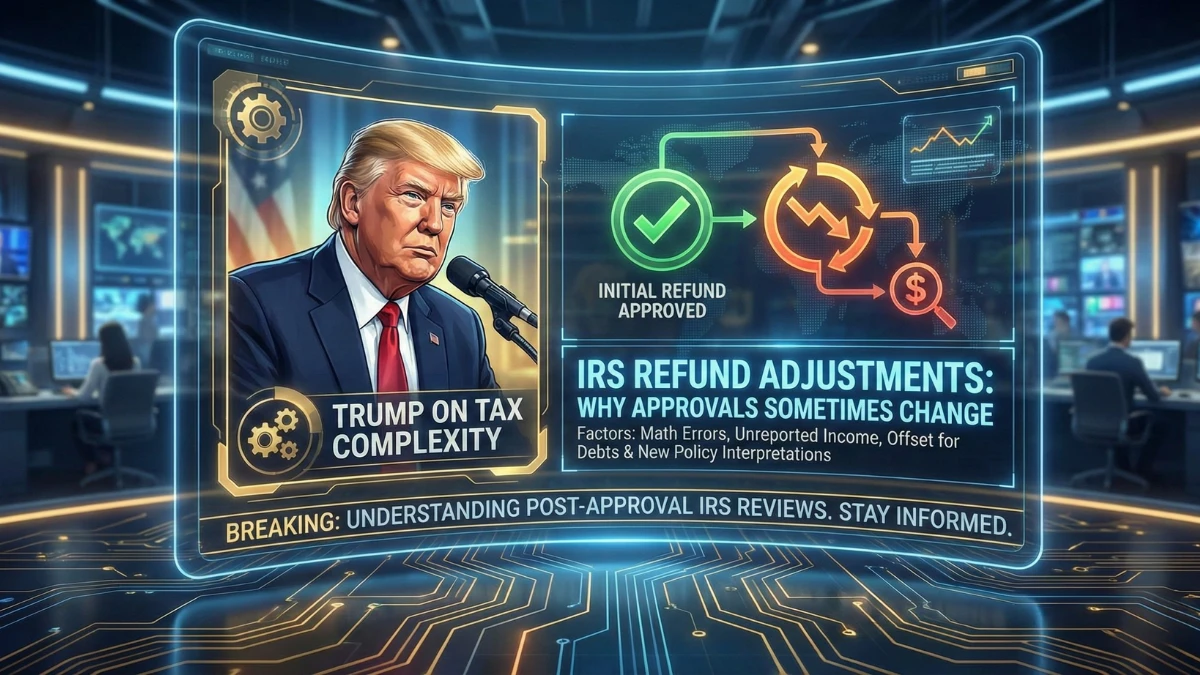
Many taxpayers are surprised when the IRS adjusts a tax refund after it was initially approved, especially if the refund amount changes or the deposit is delayed. These adjustments are usually part of normal IRS review procedures and do not automatically mean a serious problem. This article explains the legitimate reasons refunds are adjusted, how the process works, and what the Internal Revenue Service officially does when discrepancies are found.
Does Initial Refund Approval Mean the Amount Is Final
No. Initial approval does not always mean the refund amount is final. The IRS can continue automated and manual checks even after approval, especially if additional data matching or corrections are required before the payment is released.
Common Reasons the IRS Adjusts Refunds After Approval
| Reason | What Happens |
|---|---|
| Math corrections | IRS fixes calculation errors |
| Credit reconciliation | Credits adjusted to match records |
| Income verification | Reported income checked against filings |
| Missing forms | Refund reduced until resolved |
| Debt offsets | Refund applied to existing obligations |
Math and Calculation Corrections
If the IRS finds a math error—such as incorrect tax calculations or credit totals—it can adjust the refund automatically without requesting additional information from the taxpayer.
Tax Credit Reconciliation
Refundable credits, such as child-related or income-based credits, are frequently reviewed. If IRS records do not match the amounts claimed, the refund may be reduced or increased accordingly.
Income and Information Matching
The IRS compares tax returns with information submitted by employers, banks, and other institutions. Differences can trigger an adjustment if reported income or withholding does not align with official records.
Offsets for Outstanding Debts
Refunds may be adjusted to pay certain debts, including federal taxes owed, child support, or other qualifying obligations. These offsets occur before the refund is issued.
Why Adjustments Do Not Mean an Audit
Most refund adjustments are automated corrections, not audits. An audit involves a separate, formal review process and direct IRS contact.
How Taxpayers Are Notified
When a refund is adjusted, the IRS sends an official notice explaining the reason, the change in amount, and any rights to dispute or respond.
What Has Not Changed
There are no new IRS rules allowing random refund changes. All adjustments follow long-standing tax law and verification procedures.
What Taxpayers Should Do
Taxpayers should read IRS notices carefully, keep copies of tax documents, and respond only if the notice requests action. In many cases, no response is required.
Key Facts
- Refunds can be adjusted after initial approval
- Most changes result from automated checks
- Math errors and credit mismatches are common causes
- Offsets may reduce the final refund amount
- IRS notices explain all adjustments
Conclusion
IRS refund adjustments after initial approval are usually routine corrections, not errors or penalties. Understanding why these changes happen helps taxpayers avoid unnecessary worry and rely on official IRS communication for accurate information.
Disclaimer
This article is for informational purposes only and does not constitute tax or financial advice. IRS refund adjustments are governed by federal tax law and official IRS procedures.